


Freeze your eggs and embryo, take charge of your future.
Egg freezing is a proactive step toward building your family when you’re ready using your youngest and healthiest eggs. Our expert team is here to guide you through with personalized, proven care.
Preserving Fertility
Is egg freezing right for you?
- Not ready to grow your family
- Focused on your career, health
- Waiting for the right time or partner
- Ideal age: 20-35 years old
4 steps to the egg freezing process
Preserving your fertility is simpler than you might think, and in just 3 to 4 weeks, you can be closer to building the family you may want in the future.
01
Fertility assessment
Bloodwork and ultrasound give insight into your ovarian reserve and overall fertility health, followed by a personalized consultation.
02
Ovarian stimulation
Daily hormone injections encourage egg growth, carefully monitored through bloodwork and ultrasound to ensure your medications are working safely and effectively.
03
Egg retrieval
A fertility provider will collect your mature eggs during this outpatient procedure performed under light sedation.
04
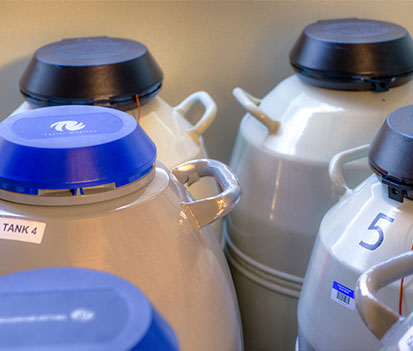
Deep freezing (Cryopreservation)
Your eggs are frozen instantly using advanced vitrification technology and safely stored indefinitely until you’re ready to use them.
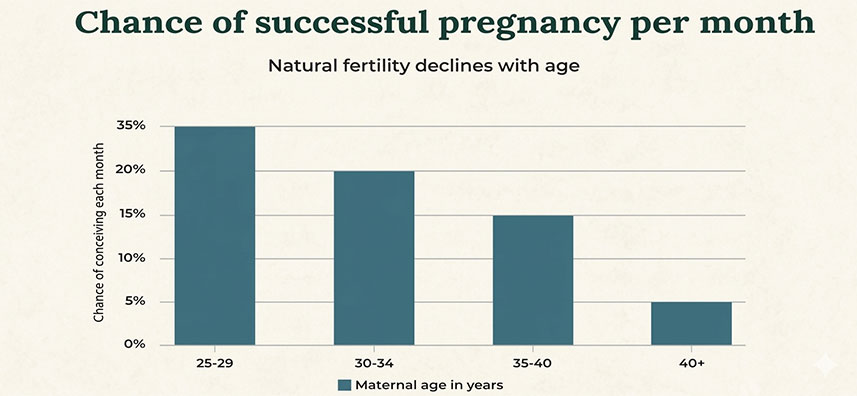
Egg freezing: Age is key.
Chance of successful pregnancy per month
- 25-29
- 30-34
- 35-40
- 40+
Frequently asked questions
A timeline is dependent on the individual situation, but the egg freezing process from start to finish typically takes about 6 weeks for most patients, not including the initial consultation, testing, and treatment planning.
There are three main steps involved in the egg freezing process. First, you will need a fertility assessment involving blood tests and an ultrasound where your doctor can determine your current fertility status. Next, you’ll inject medications to stimulate your ovaries to grow as many eggs as possible. And the final step in the egg freezing process is the egg retrieval, where we will collect and freeze your eggs.
There is no hard and fast number or rule on how many eggs a woman needs to freeze. This number is usually based on your age, your past gynecological/medical history and your family history. It is individualized and should be determined by your doctor based on your situation.
We recommend considering egg freezing in your late 20s to mid-30s, when egg quantity and quality are typically higher. There is no time like the present; your eggs are better at 30 than at 32, so if you are thinking about doing it, do it now. There is no “cut off” age but there is an age (generally >42) whereby your ability to produce eggs that are chromosomally normal is significantly reduced and it may not yield the results you are hoping for.
We has had patients freeze their eggs and return to us 10 years later to have a baby. Basically, there is no expiration date on your eggs!